

Knowing how to choose a drayage broker means looking beyond the opening rate and determining whether the provider can actually execute, monitor, and manage the container move when conditions change. For U.S. shippers and freight forwarders, the right selection process can lead to more accurate quotes, better operating decisions, and less exposure to avoidable transportation costs.
Executive Summary
A strong drayage broker should be able to explain how carriers are selected, what is monitored after booking, how exceptions are handled, what the quote includes, and who remains accountable through completion. The goal is not simply a competitive rate. It is a more executable move with clearer pricing, earlier risk detection, and fewer avoidable surprises.
How Do You Choose a Drayage Broker?
To choose a drayage broker, evaluate its port and rail experience, carrier qualification and selection process, shipment monitoring, exception management, quote transparency, technology, specialized capabilities, performance evidence, and accountability. The best fit is a provider that can explain both the rate and how the container will be managed when operating conditions change.
A drayage freight broker adds value beyond finding an available truck. The provider should help determine whether the carrier, equipment, timing, pricing, and operating plan fit the specific move.
The selection decision should not be reduced to:
Who gave us the lowest rate?
A better question is:
Which provider gives us the most confidence that the move behind the rate can actually be executed?
Table of Contents
10 Questions to Ask Before Choosing a Drayage Broker
Before awarding freight, ask the same questions of every provider you are seriously considering.
Questions at a Glance
- How much drayage experience do you actually have?
- How do you qualify the carriers that will move my containers?
- How do you choose among qualified carriers?
- What will you actively monitor after booking?
- What happens when the original plan stops working?
- Can you explain the quote before I book?
- What visibility will my team have?
- Who owns coordination when multiple parties are involved?
- Can you handle specialized or nonstandard drayage?
- What can you show me that proves you can handle this freight?
1. How Much Drayage Experience Do You Actually Have?
Drayage experience is practical knowledge of the ports, rail ramps, terminals, equipment, timing requirements, and container-specific conditions that affect whether a move can be executed as planned.
A provider that handles general truckload freight is not automatically a specialized drayage provider.
Ask whether the broker regularly works with the ports, rail ramps, and terminals your freight uses. Discuss chassis arrangements, container availability, appointments, last free day, early return dates, empty returns, prepulls, storage, transloading, and specialized container requirements when they apply.
A broad statement such as “we cover Chicago” or “we offer nationwide drayage” does not tell you whether the provider understands the actual terminal behind the move.
Geographic coverage is not the same as terminal competence.
Listen for specific operating knowledge rather than general statements about network size.
2. How Do You Qualify the Carriers That Will Move My Containers?
Carrier qualification determines whether a motor carrier meets the broker’s standards and the requirements of the specific shipment.
Ask how the broker reviews factors such as:
- Operating authority
- Insurance and safety
- Equipment
- Service history
- Terminal experience
- Rate accuracy
- Specialized qualifications
- Experience with similar moves
Then go one step further.
A carrier may meet the broker’s general qualification standards and still be a poor fit for a particular shipment because of equipment, terminal familiarity, appointments, or specialized requirements.
That distinction matters.
An approved carrier can still be the wrong carrier for the move.
Ask how the broker determines whether a carrier is not only qualified generally, but appropriate for your specific container.
3. How Do You Choose Among Qualified Carriers?
Carrier selection is the process of deciding which qualified carrier is best suited to execute a particular move.
Qualification gets a carrier onto the list.
Selection determines who receives your freight.
A broker should be able to explain whether it considers factors such as terminal familiarity, correct equipment, previous pricing accuracy, service history, communication, documentation, and prior execution.
The cheapest available carrier should not automatically win the load.
A low-priced response can lose its value quickly if the carrier lacks the correct equipment, misunderstands the terminal, misses an appointment, changes the rate after award, or cannot execute the movement as planned.
The lowest carrier response is not automatically the best executable carrier option.
Ask what historical carrier information the broker keeps and how that information influences future carrier decisions.
4. What Will You Actively Monitor After Booking?
Shipment monitoring is the ongoing review of container milestones and operating conditions that can affect timing, service, equipment, and cost exposure.
Booking a truck and monitoring a container are not the same thing.
Depending on the shipment, the broker may need to monitor:
- Container availability
- Holds
- Last free day
- Early return date
- Appointment changes
- Chassis requirements
- Pickup and delivery milestones
- Empty-return requirements
- Conditions that may increase accessorial exposure
Ask three simple questions:
What are you monitoring?
How will you know when something changes?
What will you do with that information?
A status update tells you what happened.
Active monitoring helps determine what should happen next.
Booking capacity tells you who is moving the container. Monitoring tells you who is watching the risk.
5. What Happens When the Original Plan Stops Working?
Exception management is the process used to identify an operating problem, evaluate alternatives, communicate the consequences, and coordinate the next action.
Almost any provider can describe how a routine shipment is supposed to work.
A better test is asking what happens when it does not.
Common drayage delays or disruptions may include container holds, appointment changes, chassis problems, terminal disruptions, carrier availability issues, delivery delays, or empty-return complications.
Give the broker a realistic scenario:
A container becomes available, the assigned carrier becomes unavailable, the last free day is approaching, and the delivery appointment remains fixed.
Then ask:
What happens next?
You are looking for a process—not a promise that everything will be fine.
Who identifies the problem? Who contacts your team? Who evaluates alternatives? Who explains possible timing or cost implications? Who owns escalation?
Routine moves test whether a broker can follow a plan. Exceptions test whether the broker can manage one.
6. Can You Explain the Quote Before I Book?
Drayage quote transparency means explaining what move was priced, what is included, what assumptions were used, and which costs may still depend on future events.
Do not ask only:
What is your rate?
Ask:
What does your rate actually represent?
Confirm the exact terminal, fuel treatment, chassis assumptions, required equipment, expected services, potential accessorials, carrier status, rate validity, and circumstances that could require repricing.
A clear drayage rate breakdown should help separate costs into three useful categories:
- Known: Already required by the shipment.
- Likely: Reasonably foreseeable based on the operating plan.
- Contingent: Triggered by events that have not yet occurred.
A cheap quote is not a low-cost move if required parts of the move were never included.
FMI’s Five-Point Drayage Quote Transparency Framework provides a structured way to compare the operating assumptions behind competing quotes.
7. What Visibility Will My Team Have?
Shipment visibility is access to the status, milestones, documents, and information needed to understand what is happening with a move without depending entirely on manual updates.
Rather than asking only whether the broker has technology, ask what your team can actually see and do with it.
Useful capabilities may include:
- Shipment status
- Container information
- Documents
- Proof of delivery
- Notifications
- Reporting
- Pricing and accessorial information
- Historical shipment records
Technology should support the operating process, not replace it.
A dashboard can show that something changed.
Someone still needs to understand what the change means and determine what should happen next.
The better technology question is:
What decisions does your system help us make sooner?
FMI’s My Freight Manager® is an example of using a centralized transportation environment to bring shipment information, documents, tracking, and reporting together.
8. Who Owns Coordination When Multiple Parties Are Involved?
Shipment accountability is clearly defined responsibility for coordinating communication, handoffs, exceptions, documentation, and follow-through across the parties involved in a move.
A container shipment may involve a drayage carrier, terminal, chassis provider, transload facility, warehouse, linehaul carrier, or final-delivery provider.
Ask:
- Who coordinates those parties?
- Who confirms the next stage is ready?
- Who handles exceptions?
- Who collects supporting documents?
- Who explains additional charges?
- Who follows up when another party does not respond?
- Who remains accountable through completion?
The broker cannot control every terminal, warehouse, carrier, or equipment provider.
That is not the standard.
Accountability does not mean controlling every party. It means owning the coordination when those parties affect the shipment.
Coordinating multiple container moves becomes increasingly important as more handoffs, providers, documents, and invoices enter the movement.
9. Can You Handle Specialized or Nonstandard Drayage?
Specialized drayage capability is the ability to identify and coordinate equipment, carrier qualifications, documentation, and operating requirements outside a routine container move.
Depending on your freight, that may include:
- Refrigerated containers
- Hazardous materials
- Overweight containers
- Tri-axle chassis
- In-bond shipments
- Transloading
- Long-haul drayage
- Airport or CFS pickups
- Oversize freight
- Port-to-door transportation
A broker does not need every capability for every customer.
It does need to identify when the shipment requires something beyond standard capacity before the load is awarded.
Ask:
How do you identify specialized requirements during quoting, and how do you confirm the assigned carrier can meet them?
Specialized capability matters most before an equipment or qualification problem becomes an operating problem.
10. What Can You Show Me That Proves You Can Handle This Freight?
Broker performance evidence is information showing how the provider has handled similar freight, markets, operating requirements, or customer needs.
Look beyond sales claims.
Ask for relevant:
- Case studies
- Port and rail experience
- Lane experience
- Carrier service history
- Quote accuracy
- Specialized shipment examples
- Customer feedback
- Documentation and reporting processes
If a provider offers performance percentages, ask how they are defined, what period they cover, and whether the results are relevant to your lanes.
A performance percentage without its definition, lane context, and exception criteria can tell you less than it appears to.
FMI has documented one operation that reported more than $50,000 in annual savings after moving away from a manual, email-heavy drayage booking process. The value was associated with reduced administrative work, improved rate visibility, and a more centralized workflow—not simply a lower transportation rate.
What this proves: The cost of managing the process matters too.
What the Answers Should Tell You
The ten questions should help you evaluate five things:
| Category | What You Need to Know |
|---|---|
| Experience | Does the broker understand the terminals, equipment, timing, and container requirements behind your freight? |
| Execution | Can it select the right carrier, monitor the move, and respond when conditions change? |
| Transparency | Can it explain what the quote includes and what can still change? |
| Visibility | Can your team see meaningful shipment information without constantly chasing updates? |
| Accountability | Is it clear who owns communication, exceptions, documentation, and coordination? |
The purpose is not to find a provider with the longest list of capabilities.
It is to understand what you are buying before your freight depends on it.
Choosing a drayage broker is an execution decision supported by price—not merely a price decision followed by execution.
Key Takeaways for Choosing a Drayage Broker
- Choosing a drayage broker requires evaluating more than the opening rate.
- Carrier approval and carrier suitability are different decisions.
- Booking a truck is not the same as actively monitoring the container.
- Exception management often reveals more about a provider than routine execution.
- Quote transparency requires understanding what is known, likely, and contingent.
- Technology should support operational coordination, not replace it.
- Accountability should be defined before a problem occurs.
The right broker-selection process should give your team more confidence about the carrier, pricing, equipment, monitoring responsibility, communication process, and escalation plan behind the shipment.
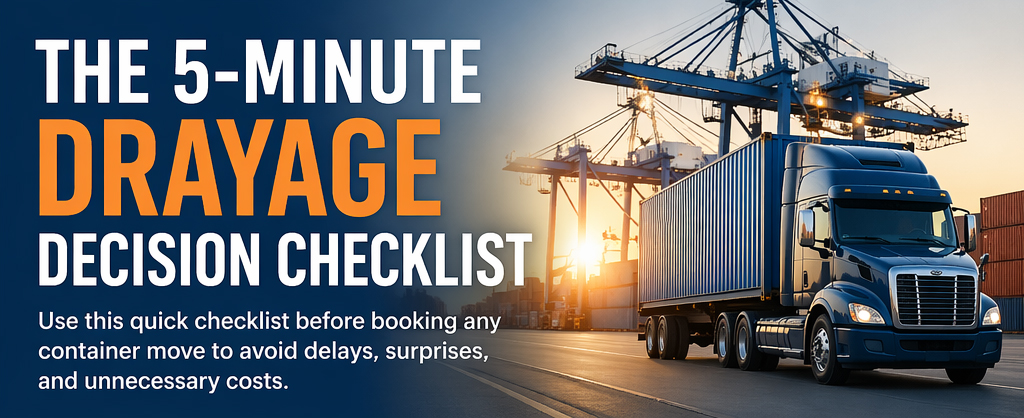
Before awarding your next move, use FMI’s free Drayage Decision Checklist to review the shipment details that can change the quote or execution plan—including availability, last free day, equipment requirements, timing, and potential accessorial exposure.
Know what the move requires before you compare the numbers.
Frequently Asked Questions
What should I look for in a drayage broker?
What questions should I ask a drayage broker before booking?
How can I tell whether a drayage quote is truly competitive?
What should a drayage broker monitor after booking?
Should I use a drayage broker or work directly with a carrier?

FMI Outlines Drayage Documentation Priorities After Court Ruling
Executive Summary: A federal appeals court decision involving detention charges during a three-day Port of Savannah closure underscores why the operating record behind a container move matters. Freight Management Inc. identifies five documentation priorities for...
How to Manage Multi-Container Drayage With One Coordinated Process
To manage multi-container drayage effectively, U.S. shippers and freight forwarders need more than separate pickup plans for each container. They need one coordinated process for the different timing requirements, handoffs, exceptions, documents, and charges those...

FMI Releases Five-Point Drayage Quote Transparency Framework
Executive Summary: An “all-in” drayage quote may still leave important costs, conditions and operating assumptions outside the opening price. FMI’s five-point framework helps shippers and freight forwarders look beyond the total by verifying the exact terminal,...