
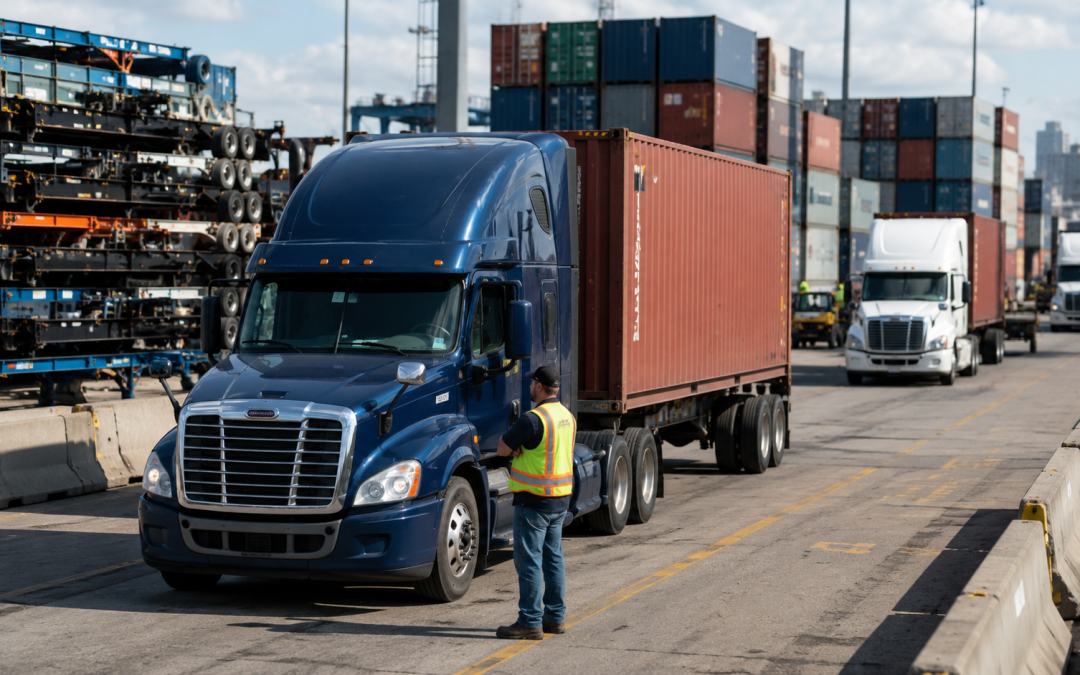
Executive Summary: Freight Management Inc. examines how accessorial risk is becoming a larger factor in drayage planning as logistics teams manage tighter appointment windows, chassis availability issues, documentation requirements, and container-related cost exposure.
ITASCA, IL — Freight Management Inc. (FMI), a U.S.-based freight brokerage with more than 40 years of experience, is examining how container-related accessorial charges are becoming a more important factor in drayage planning as logistics teams manage tighter appointment windows, uneven inland execution, chassis availability issues, and billing exposure.
The company said many added drayage costs appear after a shipment is already under pressure. A container may be available, but the warehouse appointment may not line up. A driver may be ready, but the chassis may not be in position. A shipment may be scheduled, but a clustered vessel arrival, ramp delay, or empty return restriction can change the cost profile of the move before delivery is complete.
FMI said these conditions are making early planning more important for shippers, forwarders, brokers, and transportation teams working to reduce unnecessary demurrage, detention, per diem, storage, pre-pull, chassis rental, driver wait time, and missed appointment charges.
Recent industry reporting shows why the issue remains relevant. C.H. Robinson’s May 2026 drayage market update reported that clustered vessel arrivals were creating uneven gateway pressure at major coastal gateways, including Houston, Los Angeles/Long Beach, New York/New Jersey, and Savannah. The report also noted that chassis availability and appointment access were tightening during peak arrival windows, while the National Drayage Spot Market Index was tracking roughly eight percent higher year over year.
FMI said those conditions do not always create visible systemwide disruption, but they can increase cost exposure on individual container moves. When rail ramps, terminals, chassis pools, warehouses, and final delivery locations are not aligned, logistics teams may have less time to correct problems before charges begin to accrue.
“Accessorial charges are rarely the result of one bad decision,” said Bob Mayo, CEO of Freight Management Inc. “They usually come from timing gaps. If the container is ready but the appointment is not, or the warehouse is ready but the chassis is not, the shipment can start creating cost exposure before anyone thinks of it as a problem.”
The company said the financial impact of these charges is one reason demurrage and detention have remained a regulatory and operational focus. In 2024, the Federal Maritime Commission issued updated detention and demurrage billing rules establishing requirements for invoice timing, dispute processes, and the information that must be included on invoices. The FMC said the rule was intended to promote supply chain fluidity by creating a clearer connection between the failure to pick up cargo or return equipment in a timely manner and the appropriate fee.
FMI said the rule changes highlight the importance of documentation as well as planning, especially for teams monitoring demurrage and detention exposure across container moves. Transportation teams not only need to understand when charges may begin, but also need accurate records showing container availability, appointment timing, free time, equipment return requirements, billing dates, and communications between parties.
The company said added charge exposure is also affected by how drayage information is managed before the move is booked. Teams that rely on disconnected emails, spreadsheets, carrier portals, terminal notices, phone calls, and warehouse schedules may miss timing conflicts that are visible only when the full shipment sequence is reviewed together.
Mayo said many freight teams are now evaluating drayage planning less as a one-step transportation task and more as a series of time-sensitive checkpoints.
“The truck move is only one part of the equation,” Mayo said. “The real planning challenge is knowing when the container is available, when the free time expires, when the warehouse can receive it, when equipment must be returned, and whether the carrier has what they need to execute without creating additional charges.”
FMI said this is especially important in drayage involving inland rail and high-volume port markets, where localized disruption can change quickly. Chassis constraints, gate congestion, appointment shortages, vessel bunching, rail dwell, and warehouse delays can each affect whether a planned drayage move stays within the expected cost range.
The company said businesses are increasingly looking beyond linehaul pricing when evaluating container transportation. While rate competitiveness remains important, FMI said many logistics teams are also paying closer attention to accessorial transparency, documentation accuracy, carrier communication, and planning discipline.
FMI said accessorial risk will likely remain a central planning concern throughout 2026 as cargo patterns fluctuate, appointment windows tighten during peak periods, and inland execution varies by ramp, terminal, and market. The company said reducing preventable charges will depend less on reacting to problems after they occur and more on identifying timing conflicts before the container move is already under pressure.
Additional background on container transportation workflows is available in FMI’s guide to planning a drayage move.
Frequently Asked Questions
What is drayage planning?
Drayage planning is the process of coordinating a container move before it is picked up, delivered, or returned. It includes checking container availability, appointment windows, free time, chassis needs, warehouse scheduling, carrier requirements, and equipment return details so the shipment can move with fewer delays and fewer unexpected charges.
Why are accessorial charges important in drayage?
Accessorial charges are important because they can change the final cost of a container move after the shipment is already underway. Fees such as demurrage, detention, storage, chassis rental, driver wait time, and missed appointment charges often result from timing gaps, documentation issues, or equipment constraints.
What causes extra costs in drayage moves?
Extra costs in drayage often come from misaligned timing between terminals, warehouses, carriers, chassis pools, and final delivery locations. A container may be available before the warehouse can receive it, or an appointment may be ready before equipment is available. These gaps can create cost exposure quickly.
How can companies reduce drayage accessorial risk?
Companies can reduce drayage accessorial risk by reviewing shipment details before the move is booked. This includes confirming container availability, last free day, appointment times, chassis access, equipment return requirements, and billing documentation. Better visibility and communication can help teams identify timing conflicts earlier.
Why does documentation matter in drayage planning?
Documentation matters because detention, demurrage, and other container-related charges often depend on timing records. Teams need accurate information showing when a container became available, when free time expired, when appointments were scheduled, when equipment was returned, and how parties communicated during the shipment process.
Why is drayage planning becoming more important in 2026?
Drayage planning is becoming more important as logistics teams deal with fluctuating cargo patterns, tighter appointment windows, chassis availability issues, clustered vessel arrivals, and changing inland execution conditions. Even when there is no major systemwide disruption, individual container moves can still face higher cost exposure.

FMI Outlines Drayage Documentation Priorities After Court Ruling
Executive Summary: A federal appeals court decision involving detention charges during a three-day Port of Savannah closure underscores why the operating record behind a container move matters. Freight Management Inc. identifies five documentation priorities for...
How to Manage Multi-Container Drayage With One Coordinated Process
To manage multi-container drayage effectively, U.S. shippers and freight forwarders need more than separate pickup plans for each container. They need one coordinated process for the different timing requirements, handoffs, exceptions, documents, and charges those...

How to Choose a Drayage Broker: 10 Questions to Ask Before You Book
Knowing how to choose a drayage broker means looking beyond the opening rate and determining whether the provider can actually execute, monitor, and manage the container move when conditions change. For U.S. shippers and freight forwarders, the right selection process...