

Here’s the reality: the biggest cost drivers in drayage aren’t always the freight rate—they’re the decisions made before the move begins.
This guide is for U.S. shippers and freight forwarders who want to better understand where drayage costs come from and how to reduce them through better planning and decision-making.
Executive Summary
Drayage costs are often misunderstood because the biggest drivers happen before the move is booked. Here are the key factors that impact total cost:
- Drayage costs are influenced by more than just the linehaul rate
- Timing, availability, and equipment conditions often drive unexpected charges
- Many of the most expensive issues occur before the move is booked
- Accessorial fees like chassis, wait time, and storage can significantly increase total cost
- Standardizing pre-booking decisions helps reduce delays, costs, and operational friction
Table of Contents
- What Is Included in Drayage Costs?
- 4 Reasons Why Drayage Costs Is More Expensive Than Expected
- 3 Hidden Drayage Costs That Add Up Quickly
- How to Reduce Drayage Costs Before Booking
- How a Drayage Checklist Helps Control Costs
- Key Takeaways on Drayage Costs
- Drayage Cost FAQ
What Is Included in Drayage Costs?
Drayage costs include more than just moving a container from point A to point B. While the base linehaul rate is the starting point, the total cost of a drayage move is made up of multiple factors that can change depending on timing, location, and equipment availability.
Linehaul vs Total Drayage Cost
The linehaul rate is the core transportation charge for moving a container between a port, rail ramp, or warehouse. However, this is only one part of the total cost. The final price often includes additional fees that are not always visible upfront.
Common Accessorial Charges
These are the charges that typically increase the total cost of a drayage move:
- Chassis usage fees
- Wait time at terminals or facilities
- Storage charges at ports or ramps
- Fuel surcharges
- Equipment repositioning
These charges are often situational, which is why drayage costs can feel unpredictable.
4 Reasons Why Drayage Costs Is More Expensive Than Expected
Many cost issues don’t happen during the move. They happen before the move is booked.
1. Timing Issues Around Last Free Day (LFD)
If a container is not picked up before the last free day, demurrage or detention charges can begin to accumulate quickly. Even a one-day delay can significantly increase costs.
2. Container Availability vs Scheduled Availability
A container being scheduled to arrive does not mean it is available for pickup. If availability is assumed instead of confirmed, it can lead to delays, rebooking, and added charges.
3. Chassis Imbalances and Equipment Shortages
In certain locations, chassis availability can fluctuate. When equipment is limited, it can delay moves or force higher-cost options to secure capacity.
4. Port and Rail Ramp Congestion
Congestion at ports and intermodal ramps can increase wait times, reduce efficiency, and add accessorial costs that were not originally expected.
3 Hidden Drayage Costs That Add Up Quickly
Some of the most significant costs in drayage are not obvious at first.
1. Manual Quote Time and Internal Labor
When teams spend hours sourcing rates, confirming availability, and coordinating details, that time becomes a hidden cost. Across multiple loads per week, this can add up to a substantial operational expense.
2. Rebooking and Missed Pickup Windows
If a move needs to be rescheduled due to availability issues or timing mistakes, it can create additional costs and delays that impact the entire shipment.
3 Lack of Visibility Into Real Market Conditions
Without clear visibility into current conditions at ports and ramps, decisions are often made with incomplete information. This increases the likelihood of unexpected costs.
How to Reduce Drayage Costs Before Booking
Reducing drayage costs is less about negotiating lower rates and more about making better decisions before committing to the move.
Plan Around Timing Instead of Reacting
Understanding timing constraints, especially last free day, allows teams to plan moves proactively rather than reacting to issues after they occur.
Confirm Availability Before Locking a Move
Verifying that a container is actually available for pickup helps prevent delays and avoids unnecessary rebooking.
Evaluate Accessorial Risk Upfront
Identifying potential charges before booking helps teams anticipate costs instead of being surprised by them later.
Know When to Lock Capacity vs Rate Shop
In some situations, waiting for additional quotes can lead to higher costs due to delays or reduced availability. Knowing when to secure capacity is critical.
How a Drayage Checklist Helps Control Costs
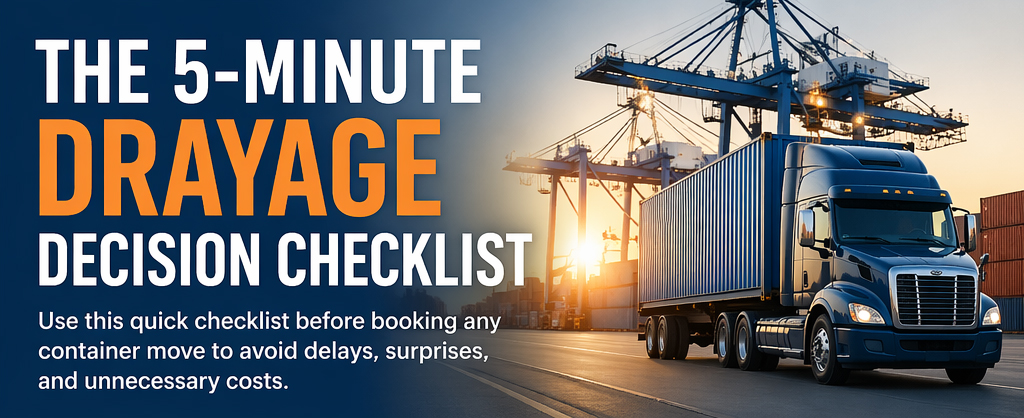
A structured drayage checklist helps standardize the decision-making process before booking.
Instead of relying on assumptions or incomplete information, teams can systematically evaluate timing, availability, equipment conditions, and cost risks.
This reduces variability, improves consistency, and helps prevent the types of issues that lead to unnecessary expenses.
If you want a simple framework your team can use on every move, use a drayage checklist before booking.
Key Takeaways on Drayage Costs
- Drayage costs are influenced by more than just the transportation rate
- Many of the most expensive issues happen before booking
- Visibility and planning are more important than rate alone
- Small inefficiencies can compound into significant annual costs
- Standardizing decisions helps reduce variability and risk
Drayage Cost FAQ
Why is drayage so expensive?
What are the most common drayage charges?
How can I reduce drayage costs?
What causes unexpected drayage fees?

FMI Outlines Drayage Documentation Priorities After Court Ruling
Executive Summary: A federal appeals court decision involving detention charges during a three-day Port of Savannah closure underscores why the operating record behind a container move matters. Freight Management Inc. identifies five documentation priorities for...
How to Manage Multi-Container Drayage With One Coordinated Process
To manage multi-container drayage effectively, U.S. shippers and freight forwarders need more than separate pickup plans for each container. They need one coordinated process for the different timing requirements, handoffs, exceptions, documents, and charges those...

How to Choose a Drayage Broker: 10 Questions to Ask Before You Book
Knowing how to choose a drayage broker means looking beyond the opening rate and determining whether the provider can actually execute, monitor, and manage the container move when conditions change. For U.S. shippers and freight forwarders, the right selection process...