
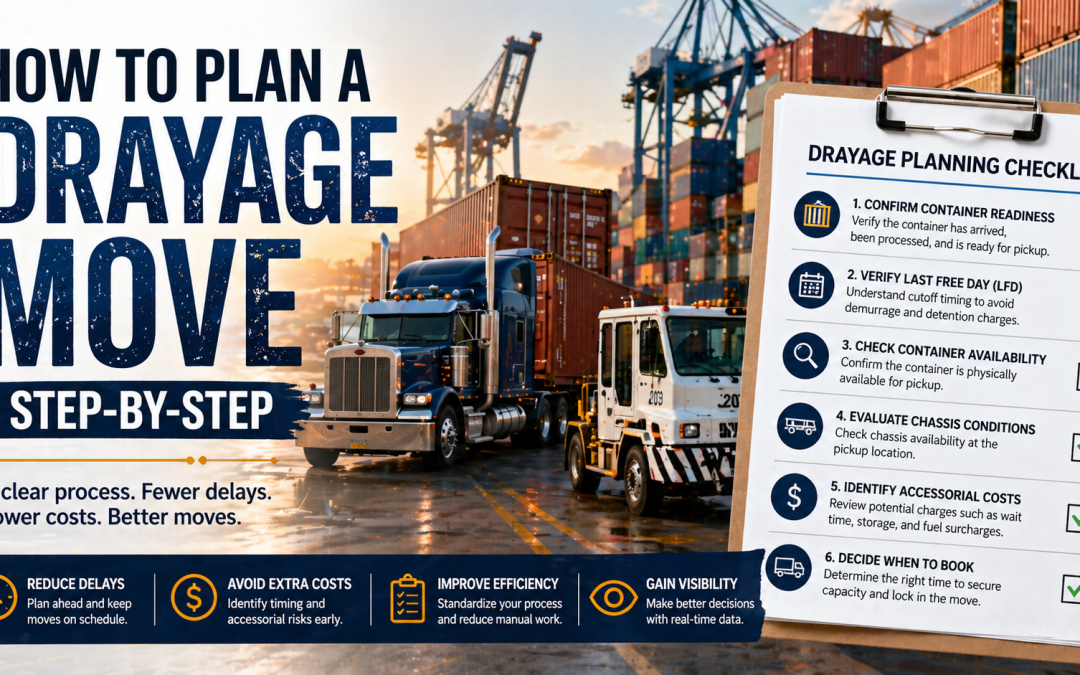
How you plan a drayage move involves more than scheduling a truck—it requires coordinating timing, availability, and equipment before the container is ever picked up. Most issues in drayage don’t come from execution—they come from gaps in planning.
Here’s the reality: the quality of your drayage planning determines the outcome of the move.
This guide is for U.S. shippers and freight forwarders who want a clear, repeatable process for planning container moves while reducing delays, unexpected costs, and operational friction.
Executive Summary
Drayage planning is where most delays and cost issues are created or avoided. Here are the key elements that define a successful drayage plan:
- Planning decisions have a bigger impact than execution in drayage
- Container readiness and availability must be confirmed before booking
- Timing, especially last free day, drives cost and flexibility
- Equipment conditions like chassis availability can impact scheduling
- Accessorial risks should be identified before committing to the move
- A standardized process improves consistency and reduces errors
Table of Contents
- What Goes Into Planning a Drayage Move
- Step-by-Step Drayage Planning Process
- 3 Common Mistakes When Planning Drayage
- How to Make Drayage Planning More Efficient
- How a Drayage Checklist Simplifies Planning
- Key Takeaways on Drayage Planning
- Drayage Planning FAQ
What Goes Into Planning a Drayage Move
Drayage planning involves coordinating multiple variables before scheduling transportation. Each step plays a role in whether the move runs smoothly or encounters delays.
Port vs Rail Drayage Differences
Port drayage and rail ramp drayage share similar planning requirements, but each has unique timing, congestion patterns, and operational constraints. Understanding these differences helps set realistic expectations for pickup and delivery.
Why Planning Matters More Than Execution
Execution depends on planning. If key details such as availability, timing, and equipment are not confirmed ahead of time, even a well-coordinated move can be delayed or disrupted.
Step-by-Step Drayage Planning Process
A structured approach helps reduce variability and ensures that critical details are not missed.
Step 1: Confirm Container Readiness
Verify that the container has arrived, been processed, and is eligible for pickup. This prevents scheduling moves for containers that are not yet available.
Step 2: Verify Last Free Day (LFD)
Understand the cutoff timing for the container. This determines how much flexibility exists and helps avoid demurrage or detention charges.
Step 3: Check Container Availability
Confirm that the container is physically available for pickup, not just scheduled to be available. This step is critical to avoiding delays.
Step 4: Evaluate Chassis Conditions
Check whether chassis equipment is available at the pickup location. Equipment shortages can delay otherwise ready moves.
Step 5: Identify Potential Accessorial Costs
Review potential charges such as wait time, storage, or fuel surcharges. Identifying these early helps prevent cost surprises.
Step 6: Decide When to Book
Determine whether to secure capacity immediately or continue evaluating options. Timing this decision correctly can impact both cost and reliability.
3 Common Mistakes When Planning Drayage
Even experienced teams can run into issues when planning steps are skipped or rushed.
1. Booking Before Confirming Availability
Scheduling a move without confirming container availability is one of the most common causes of delays.
2. Ignoring Timing Constraints
Failing to account for last free day or terminal timing can lead to added costs and reduced flexibility.
3. Over-Focusing on Rate Instead of Risk
Focusing only on price without considering timing, availability, or equipment conditions can result in higher total costs and delays.
How to Make Drayage Planning More Efficient
Improving planning efficiency reduces both time spent and risk exposure.
1. Standardize Your Process
Using a consistent framework ensures that each move is evaluated the same way, reducing variability and missed steps.
2. Reduce Manual Coordination
Minimizing time spent sourcing information and confirming details improves speed and reduces internal labor costs.
3. Improve Visibility Before Booking
Better visibility into container status, equipment, and timing allows for more accurate decision-making.
How a Drayage Checklist Simplifies Planning
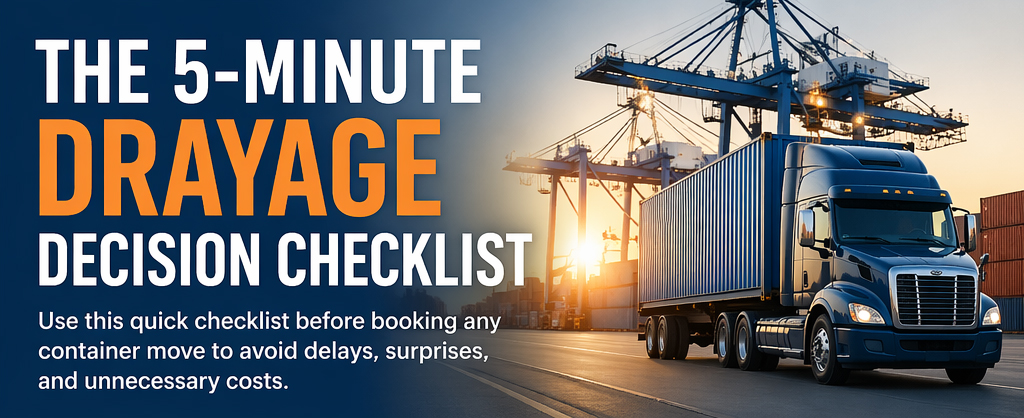
A drayage checklist turns a complex planning process into a repeatable system.
Instead of relying on experience or assumptions, teams can follow a structured set of checks to confirm availability, timing, equipment, and cost risks before booking.
This improves consistency, reduces errors, and helps prevent delays and unexpected charges.
If you want a simple framework your team can use on every move, use a drayage checklist before booking.
Key Takeaways on Drayage Planning
- Planning is the most important phase of a drayage move
- Confirming availability and timing prevents delays
- Equipment conditions can impact execution
- Standardizing decisions improves consistency
- Better planning reduces both cost and operational friction
Drayage Planning FAQ
How do you plan a drayage move?
What is the drayage process?
What should you check before booking drayage?
How can you improve drayage planning?

FMI Outlines Drayage Documentation Priorities After Court Ruling
Executive Summary: A federal appeals court decision involving detention charges during a three-day Port of Savannah closure underscores why the operating record behind a container move matters. Freight Management Inc. identifies five documentation priorities for...
How to Manage Multi-Container Drayage With One Coordinated Process
To manage multi-container drayage effectively, U.S. shippers and freight forwarders need more than separate pickup plans for each container. They need one coordinated process for the different timing requirements, handoffs, exceptions, documents, and charges those...

How to Choose a Drayage Broker: 10 Questions to Ask Before You Book
Knowing how to choose a drayage broker means looking beyond the opening rate and determining whether the provider can actually execute, monitor, and manage the container move when conditions change. For U.S. shippers and freight forwarders, the right selection process...